Buy ahorarepublicas.eu ?
We are moving the project
ahorarepublicas.eu .
Are you interested in purchasing the domain
ahorarepublicas.eu ?
domain@kv-gmbh.de · 0541-91531010
Buy ahorarepublicas.eu ?
What is the KP-Plus effect in Pokémon Sword?
The KP-Plus effect in Pokémon Sword is a feature that allows players to earn extra Effort Values (EVs) when using vitamins to increase a Pokémon's stats. Normally, vitamins can only be used to increase a Pokémon's EVs up to a certain point, but with the KP-Plus effect, players can go beyond that limit and further boost their Pokémon's stats. This can be especially useful for competitive players looking to maximize their Pokémon's potential in battles. **
What is ATP, KP, and ADP?
ATP (adenosine triphosphate) is a molecule that stores and transfers energy within cells. It is often referred to as the "energy currency" of the cell. KP (potassium phosphate) is a salt that contains potassium and phosphate ions. It is involved in various cellular processes, including energy metabolism. ADP (adenosine diphosphate) is a molecule that forms when ATP loses one of its phosphate groups during energy-releasing reactions. ADP can be converted back into ATP through cellular respiration to replenish the cell's energy supply. **

Similar search terms for KP-Plus
Top-Angebote
Products related to KP-Plus:
-
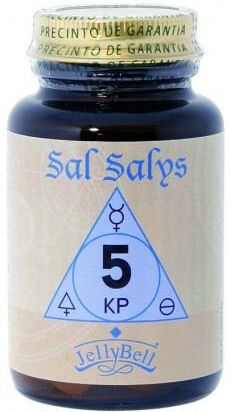
Jellybell Salys Salt 5 Kp 90 TabletsNutrition and Supplements Vitamins and minerals Jellybell Salys Salt 5 Kp 90 Tablets Salys Salt 5 KP 90 Tablets Salys 5 Salt takes advantage of all the plant's minerals. Thanks to this technique, Jellybell has created Salys 5 Salt, which is more concentrated and effective than its raw material, while maintaining all its properties and minerals. Instructions for Use: *Take 3 tablets a day. Presentation : 90 Tablets16,66 £*Shipping: 3,99 £Secure redirect to the provider


-
What is Kp-Krit in control engineering?
Kp-Krit, also known as the ultimate gain, is a parameter used in control engineering to determine the ultimate gain of a system. It is used in the Ziegler-Nichols method for tuning proportional-integral-derivative (PID) controllers. Kp-Krit is the value of the proportional gain at which the system oscillates at its ultimate frequency and amplitude. This parameter is used to calculate the proportional, integral, and derivative gains for the PID controller to achieve the desired system response. **
-
What does the term controller KP mean?
The term "controller KP" refers to the proportional gain of a controller in a control system. The proportional gain determines the strength of the response of the controller to the error signal, which is the difference between the desired setpoint and the actual output. A higher KP value will result in a stronger response to the error signal, while a lower KP value will result in a weaker response. Finding the appropriate KP value is crucial for achieving the desired performance and stability of the control system. **
-
How do you calculate the Kp value?
To calculate the Kp value, you first need to write the balanced chemical equation for the reaction. Then, determine the concentrations of the products and reactants at equilibrium. Next, plug these concentrations into the Kp expression, which is the equilibrium constant for partial pressures. Finally, calculate the Kp value using the formula Kp = (P_product1^x * P_product2^y) / (P_reactant1^a * P_reactant2^b), where x, y, a, and b are the coefficients of the balanced equation. **
-
How can one convert kp to kg?
To convert from kiloponds (kp) to kilograms (kg), you can use the conversion factor 1 kp = 9.80665 kg. So, to convert kp to kg, you would multiply the number of kiloponds by 9.80665. For example, if you have 10 kp, you would multiply 10 by 9.80665 to get 98.0665 kg. This conversion factor is based on the standard acceleration due to gravity, which is approximately 9.80665 m/s^2. **

What is the difference between organic and eco-friendly products?
Organic products are made from ingredients that are grown without the use of synthetic pesticides, herbicides, or fertilizers, and are often certified by a regulatory body. Eco-friendly products, on the other hand, are designed to have minimal impact on the environment throughout their entire lifecycle, from production to disposal. While organic products focus on the natural ingredients used, eco-friendly products consider the overall environmental impact of the product. In essence, organic products focus on the ingredients, while eco-friendly products focus on the entire product lifecycle. **
Is organic sustainable?
Organic farming practices can be more sustainable than conventional methods in terms of reducing chemical inputs, promoting biodiversity, and improving soil health. However, there are challenges to the scalability and efficiency of organic farming, which can impact its overall sustainability. For example, organic farming typically requires more land and labor to produce the same amount of food as conventional methods, which can limit its ability to meet global food demand. Additionally, the transportation and distribution of organic products can have a higher environmental impact due to their shorter shelf life and the need for refrigeration. Overall, while organic farming has many sustainable benefits, there are also limitations to its long-term sustainability on a large scale. **
Top-Angebote
Products related to KP-Plus:
-
"SHORELINE Napkins - Handmade Organic Cotton, Fair Trade, Eco-Dyed Artisan-Made by Sustainable Threads 20""x20"" (Set of 2)"SHORELINE Handwoven Organic Cotton Napkins Naturally elegant and thoughtfully crafted, the Shoreline napkins are woven from indigenous, drought-resistant organic cotton using traditional handspun yarns and botanical dyes.46,00 $*Shipping: 0,00 $Secure redirect to the provider
-
What is the KP-Plus effect in Pokémon Sword?
The KP-Plus effect in Pokémon Sword is a feature that allows players to earn extra Effort Values (EVs) when using vitamins to increase a Pokémon's stats. Normally, vitamins can only be used to increase a Pokémon's EVs up to a certain point, but with the KP-Plus effect, players can go beyond that limit and further boost their Pokémon's stats. This can be especially useful for competitive players looking to maximize their Pokémon's potential in battles. **
-
What is ATP, KP, and ADP?
ATP (adenosine triphosphate) is a molecule that stores and transfers energy within cells. It is often referred to as the "energy currency" of the cell. KP (potassium phosphate) is a salt that contains potassium and phosphate ions. It is involved in various cellular processes, including energy metabolism. ADP (adenosine diphosphate) is a molecule that forms when ATP loses one of its phosphate groups during energy-releasing reactions. ADP can be converted back into ATP through cellular respiration to replenish the cell's energy supply. **
-
What is Kp-Krit in control engineering?
Kp-Krit, also known as the ultimate gain, is a parameter used in control engineering to determine the ultimate gain of a system. It is used in the Ziegler-Nichols method for tuning proportional-integral-derivative (PID) controllers. Kp-Krit is the value of the proportional gain at which the system oscillates at its ultimate frequency and amplitude. This parameter is used to calculate the proportional, integral, and derivative gains for the PID controller to achieve the desired system response. **
-
What does the term controller KP mean?
The term "controller KP" refers to the proportional gain of a controller in a control system. The proportional gain determines the strength of the response of the controller to the error signal, which is the difference between the desired setpoint and the actual output. A higher KP value will result in a stronger response to the error signal, while a lower KP value will result in a weaker response. Finding the appropriate KP value is crucial for achieving the desired performance and stability of the control system. **
Similar search terms for KP-Plus
-
Jellybell Salys Salt 5 Kp 90 TabletsNutrition and Supplements Vitamins and minerals Jellybell Salys Salt 5 Kp 90 Tablets Salys Salt 5 KP 90 Tablets Salys 5 Salt takes advantage of all the plant's minerals. Thanks to this technique, Jellybell has created Salys 5 Salt, which is more concentrated and effective than its raw material, while maintaining all its properties and minerals. Instructions for Use: *Take 3 tablets a day. Presentation : 90 Tablets16,66 £*Shipping: 3,99 £Secure redirect to the provider
-
How do you calculate the Kp value?
To calculate the Kp value, you first need to write the balanced chemical equation for the reaction. Then, determine the concentrations of the products and reactants at equilibrium. Next, plug these concentrations into the Kp expression, which is the equilibrium constant for partial pressures. Finally, calculate the Kp value using the formula Kp = (P_product1^x * P_product2^y) / (P_reactant1^a * P_reactant2^b), where x, y, a, and b are the coefficients of the balanced equation. **
-
How can one convert kp to kg?
To convert from kiloponds (kp) to kilograms (kg), you can use the conversion factor 1 kp = 9.80665 kg. So, to convert kp to kg, you would multiply the number of kiloponds by 9.80665. For example, if you have 10 kp, you would multiply 10 by 9.80665 to get 98.0665 kg. This conversion factor is based on the standard acceleration due to gravity, which is approximately 9.80665 m/s^2. **
-
What is the difference between organic and eco-friendly products?
Organic products are made from ingredients that are grown without the use of synthetic pesticides, herbicides, or fertilizers, and are often certified by a regulatory body. Eco-friendly products, on the other hand, are designed to have minimal impact on the environment throughout their entire lifecycle, from production to disposal. While organic products focus on the natural ingredients used, eco-friendly products consider the overall environmental impact of the product. In essence, organic products focus on the ingredients, while eco-friendly products focus on the entire product lifecycle. **
-
Is organic sustainable?
Organic farming practices can be more sustainable than conventional methods in terms of reducing chemical inputs, promoting biodiversity, and improving soil health. However, there are challenges to the scalability and efficiency of organic farming, which can impact its overall sustainability. For example, organic farming typically requires more land and labor to produce the same amount of food as conventional methods, which can limit its ability to meet global food demand. Additionally, the transportation and distribution of organic products can have a higher environmental impact due to their shorter shelf life and the need for refrigeration. Overall, while organic farming has many sustainable benefits, there are also limitations to its long-term sustainability on a large scale. **
* All prices are inclusive of VAT and, if applicable, plus shipping costs. The offer information is based on the details provided by the respective shop and is updated through automated processes. Real-time updates do not occur, so deviations can occur in individual cases. ** Note: Parts of this content were created by AI.