Buy ahorarepublicas.eu ?
We are moving the project
ahorarepublicas.eu .
Are you interested in purchasing the domain
ahorarepublicas.eu ?
domain@kv-gmbh.de · 0541-91531010
Buy ahorarepublicas.eu ?
What is the difference between vocalic coda and consonantal coda?
A vocalic coda is the ending sound of a syllable that is a vowel or a diphthong, while a consonantal coda is the ending sound of a syllable that is a consonant. In other words, a vocalic coda ends with a vowel sound, while a consonantal coda ends with a consonant sound. For example, in the word "go," the "o" is a vocalic coda, while in the word "cat," the "t" is a consonantal coda. **
What is the difference between organic and eco-friendly products?
Organic products are made from ingredients that are grown without the use of synthetic pesticides, herbicides, or fertilizers, and are often certified by a regulatory body. Eco-friendly products, on the other hand, are designed to have minimal impact on the environment throughout their entire lifecycle, from production to disposal. While organic products focus on the natural ingredients used, eco-friendly products consider the overall environmental impact of the product. In essence, organic products focus on the ingredients, while eco-friendly products focus on the entire product lifecycle. **
Similar search terms for Coda
Top-Angebote
Products related to Coda:
-
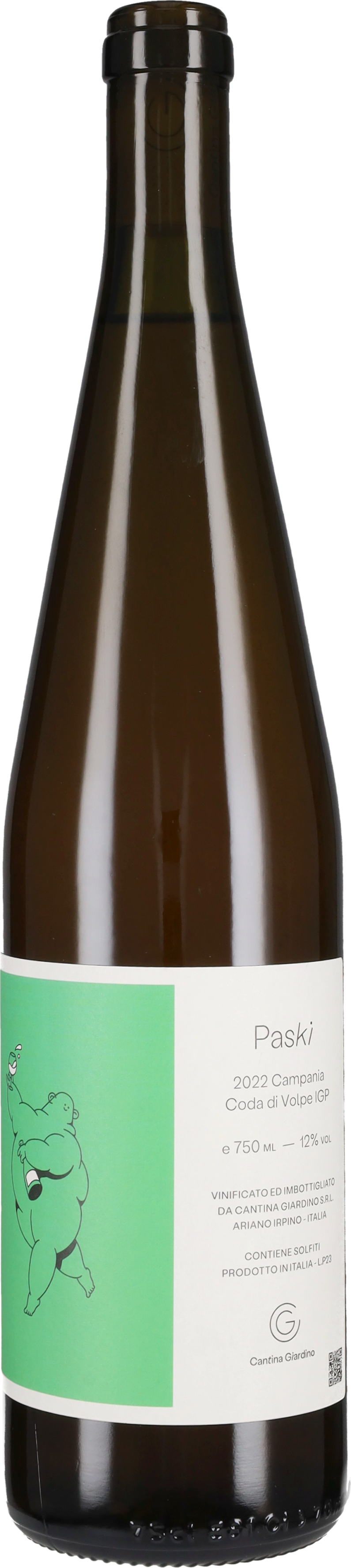
Coda di Volpe 'Paski' Cantina Giardino 2022The Coda di Volpe "Paski" by Cantina Giardino is a vertical white wine, just like the deep roots of the old 60-year-old native vines of Coda di Volpe that rise in the Irpinia area and are masterfully recovered and cultivated by the young winery. Young but with very clear ideas, that is to bring back to life, in the truest sense of the word, the territory and to offer panoramic insights to the imagination regarding the area through the enjoyment of this wine waiting to be discovered. The vines from which the Coda di Volpe grapes are harvested are wonderfully oriented to the South and are located at an altitude of 450 meters on a soil of limestone, sandy, and clay type. In the winery, only the operation of subtraction reigns: no clarifications, filtrations, and invasive interventions. Only manual labor and gestures follow the operation of destemming. After a 5-day maceration, the pressing is done with a wooden press, as in the past, and spontaneous fermentation takes place for a small percentage in small barrels of chestnut and the remaining in steel. The wine ages for a period of 12 months in chestnut barrels. The "Paski" Coda di Volpe is of intense straw yellow color, with cloudy hues as it is not filtered; everything that lives and brings positivity is never eliminated. On the nose, there is a slight volatile sensation, but it does not clash, rather it enhances this macerated white. It is intense and complex, requires oxygenation, with notes of honey and flowers combined with mineral puffs and gunpowder. On the palate, only what has undergone the fermentation process is felt: sublime acidity and a nearly tactile body at the sip. A wine with a taut, savory, and fresh tone that should not be drunk cold. A sip of pure rustic experience.22,00 £*Shipping: 48,00 £Secure redirect to the provider
-
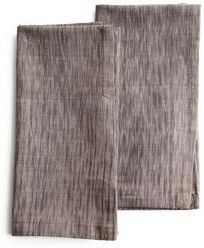
"SHORELINE Napkins - Handmade Organic Cotton, Fair Trade, Eco-Dyed Artisan-Made by Sustainable Threads 20""x20"" (Set of 2)"SHORELINE Handwoven Organic Cotton Napkins Naturally elegant and thoughtfully crafted, the Shoreline napkins are woven from indigenous, drought-resistant organic cotton using traditional handspun yarns and botanical dyes.46,00 $*Shipping: 0,00 $Secure redirect to the provider
-
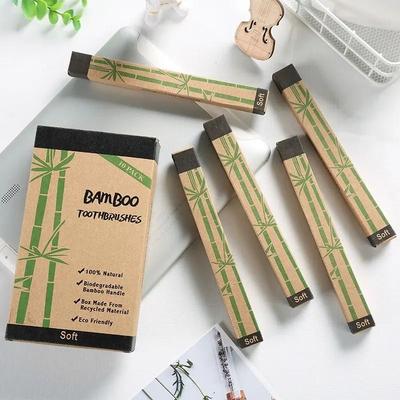
Uplift Essentials Natural Bamboo Eco Friendly Toothbrush 10 Piece Sustainable Family Pack Natural Bamboo Eco Friendly Toothbrush 10 Piece Sustainable Family PackTransition to a greener routine with this Natural Bamboo Toothbrush Set, a premium collection of bamboo products designed to reduce environmental impact without compromising on performance. Each handle is crafted from 100% sustainable bamboo,...37,97 $*Shipping: 0,00 $Secure redirect to the provider

-
Is organic sustainable?
Organic farming practices can be more sustainable than conventional methods in terms of reducing chemical inputs, promoting biodiversity, and improving soil health. However, there are challenges to the scalability and efficiency of organic farming, which can impact its overall sustainability. For example, organic farming typically requires more land and labor to produce the same amount of food as conventional methods, which can limit its ability to meet global food demand. Additionally, the transportation and distribution of organic products can have a higher environmental impact due to their shorter shelf life and the need for refrigeration. Overall, while organic farming has many sustainable benefits, there are also limitations to its long-term sustainability on a large scale. **
-
Where do exposition, development, recapitulation, and coda begin and end, and how can I recognize them?
Exposition, development, recapitulation, and coda are structural elements commonly found in classical music, particularly in sonata form. The exposition typically begins with the presentation of the main themes and ends with a closing section. The development section follows, where the themes are developed and transformed. The recapitulation then restates the main themes, often with some variations, and ends with a closing section. The coda is a concluding section that follows the recapitulation and provides a sense of finality. These sections can be recognized by changes in musical material, key, and overall structure, and are often marked by specific musical cues such as cadences or thematic restatements. **
-
Why don't eco-friendly women shave?
Eco-friendly women may choose not to shave for a variety of reasons related to sustainability and environmental impact. Shaving requires the use of disposable razors, which contribute to plastic waste in landfills. Additionally, the production and transportation of shaving products can have a significant carbon footprint. By opting not to shave, eco-friendly women can reduce their personal contribution to waste and carbon emissions, aligning with their values of environmental conservation. **
-
Which eco-friendly diapers are the best?
The best eco-friendly diapers are those that are made from sustainable materials such as bamboo, organic cotton, or plant-based fibers. Brands like Bambo Nature, Eco by Naty, and Seventh Generation are popular choices for their commitment to using environmentally friendly materials and reducing their carbon footprint. It's important to look for diapers that are free from harmful chemicals, dyes, and fragrances to ensure they are safe for both your baby and the environment. Ultimately, the best eco-friendly diaper will depend on your personal preferences and values, so it's worth trying a few different brands to see which one works best for you and your baby. **

Can't you lead this eco-friendly life anymore?
Yes, I can still lead an eco-friendly life. Making sustainable choices and reducing my environmental impact is a priority for me. I continue to practice habits such as recycling, reducing waste, conserving energy, and supporting environmentally-friendly products and practices. It is important to me to do my part in protecting the planet for future generations. **
Why is eco-friendly so successful in Germany?
Eco-friendly products and practices are successful in Germany due to a combination of factors. Firstly, there is a strong cultural emphasis on environmental consciousness and sustainability in Germany, which has led to widespread support for eco-friendly initiatives. Additionally, the German government has implemented policies and incentives to promote eco-friendly practices, such as subsidies for renewable energy and strict regulations on waste management. Furthermore, German consumers are increasingly aware of the environmental impact of their choices and are willing to pay a premium for eco-friendly products, driving demand for sustainable options in the market. **
Top-Angebote
Products related to Coda:
-
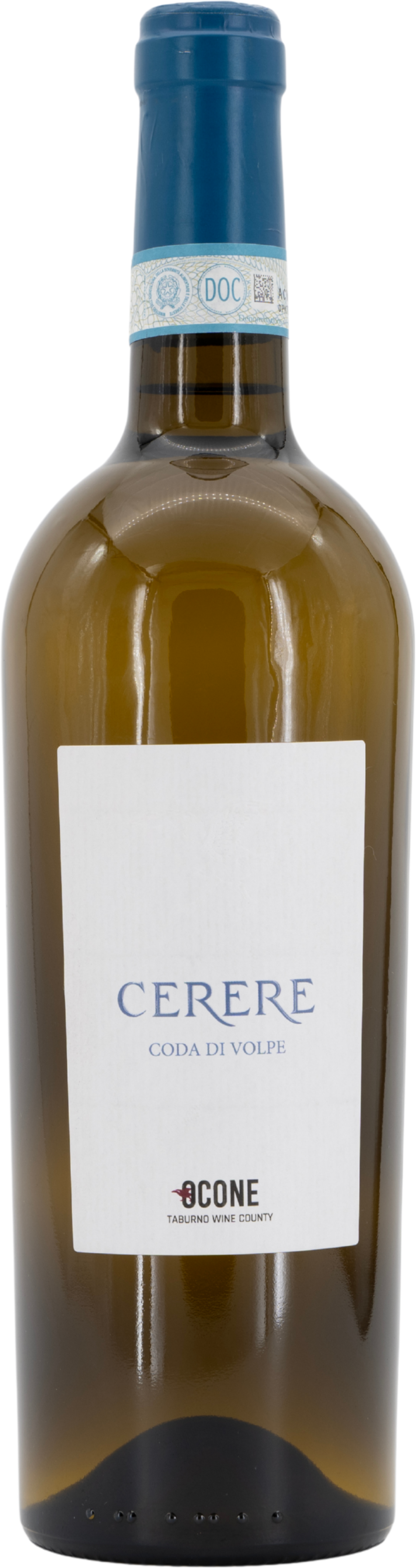
Coda di Volpe 'Cerere' Ocone 2025The Coda di Volpe from Ocone embodies a wish; it is associated with Cerere, a maternal deity of the earth and fertility; a goddess of the harvest directly linked to the healthy lushness of the white grape vineyards of this winery that began its activity in 1908 thanks to the far-sighted passion of Giuseppe Ocone and which in the following decades quickly became a top-level entrepreneurial and agricultural reality. Today Domenico Ocone and Nicola Pastore use modern technologies in the service of tradition, history, and environmental sustainability. We are at La Madonnella, on a vineyard of about 10 hectares, on hilly vineyards, cultivated with predominantly organic fertilizers. We are in the municipality of Ponte, with a South-West exposure, on medium consistency soils rich in clay, located about 300 meters above sea level. Here, after a brief maceration on the skins at low temperature, the Coda di Volpe "Cerere" from Ocone is left to mature for a few months in steel to not alter in any way the intrinsic characteristics of this great grape variety, too often forgotten. An ancient grape variety, from Roman times, not very vigorous, but it gives rise to wines of great aromatic complexity. “Cerere” is a Coda di Volpe that reveals all its complexity and elegance, with notes of wisteria and ripe yellow and white fleshed fruit. A Coda di Volpe with a truly enviable quality/price ratio…9,00 £*Shipping: 48,00 £Secure redirect to the provider
-
Coda di Volpe 'Paski' Cantina Giardino 2022The Coda di Volpe "Paski" by Cantina Giardino is a vertical white wine, just like the deep roots of the old 60-year-old native vines of Coda di Volpe that rise in the Irpinia area and are masterfully recovered and cultivated by the young winery. Young but with very clear ideas, that is to bring back to life, in the truest sense of the word, the territory and to offer panoramic insights to the imagination regarding the area through the enjoyment of this wine waiting to be discovered. The vines from which the Coda di Volpe grapes are harvested are wonderfully oriented to the South and are located at an altitude of 450 meters on a soil of limestone, sandy, and clay type. In the winery, only the operation of subtraction reigns: no clarifications, filtrations, and invasive interventions. Only manual labor and gestures follow the operation of destemming. After a 5-day maceration, the pressing is done with a wooden press, as in the past, and spontaneous fermentation takes place for a small percentage in small barrels of chestnut and the remaining in steel. The wine ages for a period of 12 months in chestnut barrels. The "Paski" Coda di Volpe is of intense straw yellow color, with cloudy hues as it is not filtered; everything that lives and brings positivity is never eliminated. On the nose, there is a slight volatile sensation, but it does not clash, rather it enhances this macerated white. It is intense and complex, requires oxygenation, with notes of honey and flowers combined with mineral puffs and gunpowder. On the palate, only what has undergone the fermentation process is felt: sublime acidity and a nearly tactile body at the sip. A wine with a taut, savory, and fresh tone that should not be drunk cold. A sip of pure rustic experience.22,00 £*Shipping: 48,00 £Secure redirect to the provider
-
"SHORELINE Napkins - Handmade Organic Cotton, Fair Trade, Eco-Dyed Artisan-Made by Sustainable Threads 20""x20"" (Set of 2)"SHORELINE Handwoven Organic Cotton Napkins Naturally elegant and thoughtfully crafted, the Shoreline napkins are woven from indigenous, drought-resistant organic cotton using traditional handspun yarns and botanical dyes.46,00 $*Shipping: 0,00 $Secure redirect to the provider
-
What is the difference between vocalic coda and consonantal coda?
A vocalic coda is the ending sound of a syllable that is a vowel or a diphthong, while a consonantal coda is the ending sound of a syllable that is a consonant. In other words, a vocalic coda ends with a vowel sound, while a consonantal coda ends with a consonant sound. For example, in the word "go," the "o" is a vocalic coda, while in the word "cat," the "t" is a consonantal coda. **
-
What is the difference between organic and eco-friendly products?
Organic products are made from ingredients that are grown without the use of synthetic pesticides, herbicides, or fertilizers, and are often certified by a regulatory body. Eco-friendly products, on the other hand, are designed to have minimal impact on the environment throughout their entire lifecycle, from production to disposal. While organic products focus on the natural ingredients used, eco-friendly products consider the overall environmental impact of the product. In essence, organic products focus on the ingredients, while eco-friendly products focus on the entire product lifecycle. **
-
Is organic sustainable?
Organic farming practices can be more sustainable than conventional methods in terms of reducing chemical inputs, promoting biodiversity, and improving soil health. However, there are challenges to the scalability and efficiency of organic farming, which can impact its overall sustainability. For example, organic farming typically requires more land and labor to produce the same amount of food as conventional methods, which can limit its ability to meet global food demand. Additionally, the transportation and distribution of organic products can have a higher environmental impact due to their shorter shelf life and the need for refrigeration. Overall, while organic farming has many sustainable benefits, there are also limitations to its long-term sustainability on a large scale. **
-
Where do exposition, development, recapitulation, and coda begin and end, and how can I recognize them?
Exposition, development, recapitulation, and coda are structural elements commonly found in classical music, particularly in sonata form. The exposition typically begins with the presentation of the main themes and ends with a closing section. The development section follows, where the themes are developed and transformed. The recapitulation then restates the main themes, often with some variations, and ends with a closing section. The coda is a concluding section that follows the recapitulation and provides a sense of finality. These sections can be recognized by changes in musical material, key, and overall structure, and are often marked by specific musical cues such as cadences or thematic restatements. **
Similar search terms for Coda
-
Uplift Essentials Natural Bamboo Eco Friendly Toothbrush 10 Piece Sustainable Family Pack Natural Bamboo Eco Friendly Toothbrush 10 Piece Sustainable Family PackTransition to a greener routine with this Natural Bamboo Toothbrush Set, a premium collection of bamboo products designed to reduce environmental impact without compromising on performance. Each handle is crafted from 100% sustainable bamboo,...37,97 $*Shipping: 0,00 $Secure redirect to the provider
-
"TIMELESS Organic Cotton Napkins - Handmade, Fair Trade, Eco-Dyed by Sustainable Threads - 20""x20"" (Set of 2)"TIMELESS Collection Handwoven Organic Cotton Napkins - Set of 2 Classic and enduring, these yarn-dyed, handwoven napkins are crafted from indigenous, drought-resistant organic cotton using traditional handspun and botanical dye methods.64,00 $*Shipping: 0,00 $Secure redirect to the provider
-
Why don't eco-friendly women shave?
Eco-friendly women may choose not to shave for a variety of reasons related to sustainability and environmental impact. Shaving requires the use of disposable razors, which contribute to plastic waste in landfills. Additionally, the production and transportation of shaving products can have a significant carbon footprint. By opting not to shave, eco-friendly women can reduce their personal contribution to waste and carbon emissions, aligning with their values of environmental conservation. **
-
Which eco-friendly diapers are the best?
The best eco-friendly diapers are those that are made from sustainable materials such as bamboo, organic cotton, or plant-based fibers. Brands like Bambo Nature, Eco by Naty, and Seventh Generation are popular choices for their commitment to using environmentally friendly materials and reducing their carbon footprint. It's important to look for diapers that are free from harmful chemicals, dyes, and fragrances to ensure they are safe for both your baby and the environment. Ultimately, the best eco-friendly diaper will depend on your personal preferences and values, so it's worth trying a few different brands to see which one works best for you and your baby. **
-
Can't you lead this eco-friendly life anymore?
Yes, I can still lead an eco-friendly life. Making sustainable choices and reducing my environmental impact is a priority for me. I continue to practice habits such as recycling, reducing waste, conserving energy, and supporting environmentally-friendly products and practices. It is important to me to do my part in protecting the planet for future generations. **
-
Why is eco-friendly so successful in Germany?
Eco-friendly products and practices are successful in Germany due to a combination of factors. Firstly, there is a strong cultural emphasis on environmental consciousness and sustainability in Germany, which has led to widespread support for eco-friendly initiatives. Additionally, the German government has implemented policies and incentives to promote eco-friendly practices, such as subsidies for renewable energy and strict regulations on waste management. Furthermore, German consumers are increasingly aware of the environmental impact of their choices and are willing to pay a premium for eco-friendly products, driving demand for sustainable options in the market. **
* All prices are inclusive of VAT and, if applicable, plus shipping costs. The offer information is based on the details provided by the respective shop and is updated through automated processes. Real-time updates do not occur, so deviations can occur in individual cases. ** Note: Parts of this content were created by AI.